Navigating Neck Pain
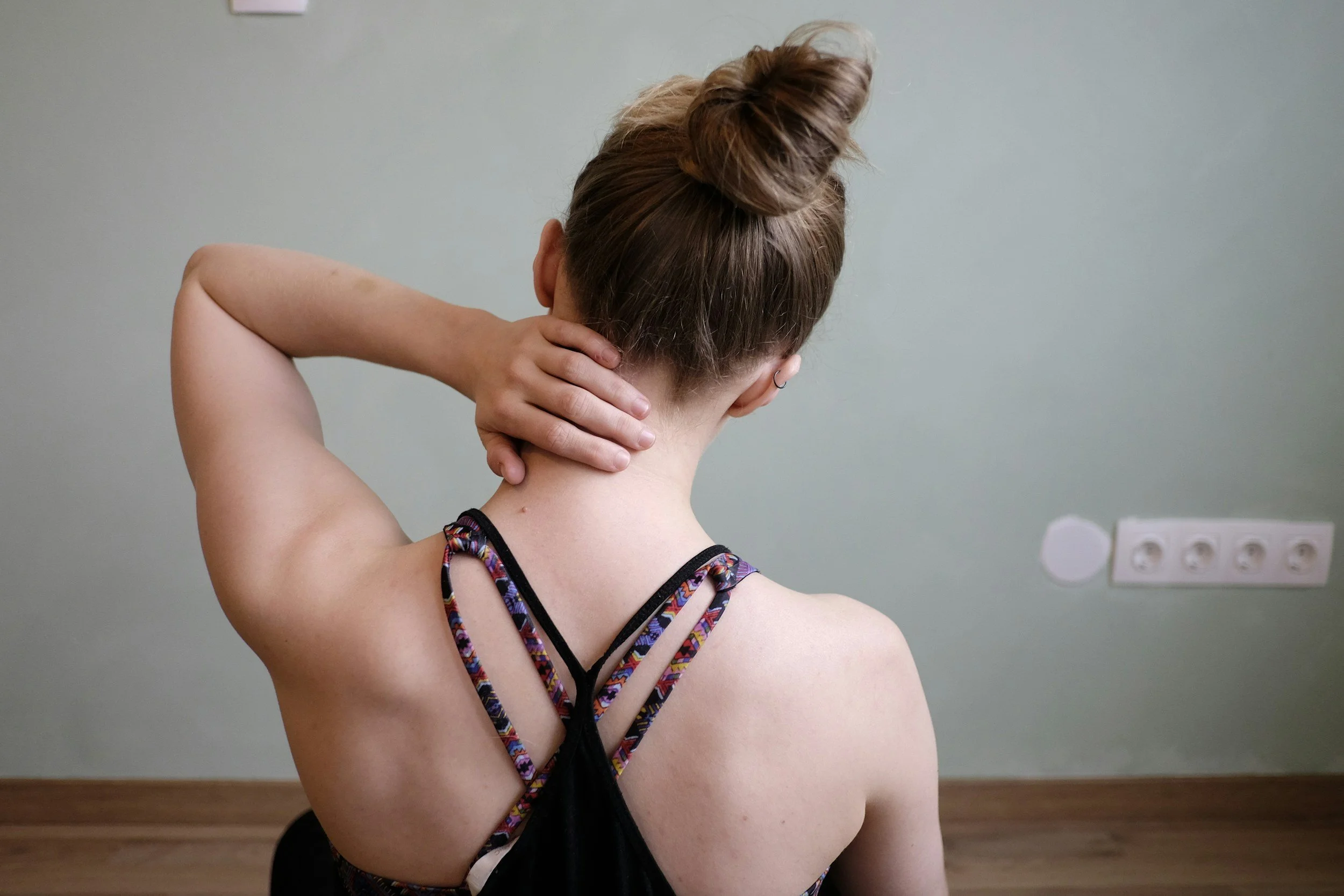
Neck and shoulder pain doesn’t always reveal itself during everyday activities. Many people feel “fine” until they begin training overhead, hanging from a bar, or performing higher-level movements like pull-ups. That’s often where underlying issues in shoulder stability, scapular control, and movement coordination become obvious.
In a recent physical therapy session, we worked with a patient experiencing cervical (neck) and right-sided shoulder pain, particularly during pulling and overhead movements. Instead of simply avoiding the movement, we used a targeted, progressive approach to improve mechanics and reduce pain — while still allowing him to train.
Understanding the Problem: Compensation Patterns
During pull-ups, we noticed several common compensation strategies on the affected right side:
Shoulder hiking (excessive upper trapezius dominance)
Increased lat engagement to “muscle through” the movement
Reduced contribution from key stabilizers of the shoulder blade
These compensations often occur when the shoulder lacks stability, endurance, or coordination — especially following pain, injury, or prolonged poor posture. While these strategies allow the movement to happen, they also place extra stress on the neck and shoulder, often worsening symptoms over time.
Why Strength Alone Isn’t Enough
A common mistake is assuming that shoulder pain is simply a strength issue. In reality, many people are strong — just not efficient.
Effective shoulder function requires:
Stable scapular positioning
Controlled motion through the shoulder joint
Proper sequencing between the shoulder blade, arm, and trunk
The ability to maintain these qualities under fatigue
Without these components, even strong athletes can develop neck and shoulder pain.
The Physical Therapy Approach We Used
Instead of removing pull-ups entirely, we modified the movement to allow for better mechanics and motor learning.
1. Open-Chain Overhead Stability
We focused on improving control of the shoulder and scapula when the arm moves freely overhead. This helps restore joint awareness and reinforces proper muscle activation without excessive load.
2. Closed Kinetic Chain Stability
Closed-chain exercises (where the hand is fixed on a surface) improve shoulder stability by increasing joint compression and proprioceptive input. These drills are excellent for teaching the shoulder how to “stack” and stabilize.
3. Scapular Endurance Training
Many compensation patterns don’t appear immediately — they show up as fatigue sets in. Building endurance in the muscles that control the shoulder blade is essential for sustained, pain-free movement.
4. Assisted Pull-Ups to Reduce Compensation
By adding band assistance, we reduced the overall load of the pull-up. This allowed the patient to:
Maintain proper shoulder positioning
Minimize shoulder hiking
Decrease over-reliance on the lats
Reinforce correct mechanics through the full range of motion
The goal wasn’t to make the exercise “easier,” but to make it cleaner and more effective.
Why This Matters for Long-Term Results
Reinforcing poor movement patterns — even in the name of strength — often leads to persistent pain and plateaus in performance. Physical therapy bridges the gap between rehab and training by addressing how you move, not just what you lift.
When mechanics improve:
Neck and shoulder symptoms decrease
Strength transfers more effectively
Risk of re-injury drops
Performance improves long-term
Neck and Shoulder Pain Doesn’t Mean You’re Broken
If pull-ups, overhead lifts, or daily activities trigger neck or shoulder pain, it doesn’t mean you need to stop training — it means your body needs better input and smarter progression.
A personalized physical therapy approach can identify the root cause, correct faulty mechanics, and help you return to training with confidence.
Ready to Address Your Neck or Shoulder Pain?
If you’re dealing with neck or shoulder pain and want to move, train, and lift without limitations, we can help.
Message us today to schedule your physical therapy consult and start moving better with a plan built for your body and your goals.
